
NASA Selects 2 Instruments for Artemis IV Lunar Surface Science Mission
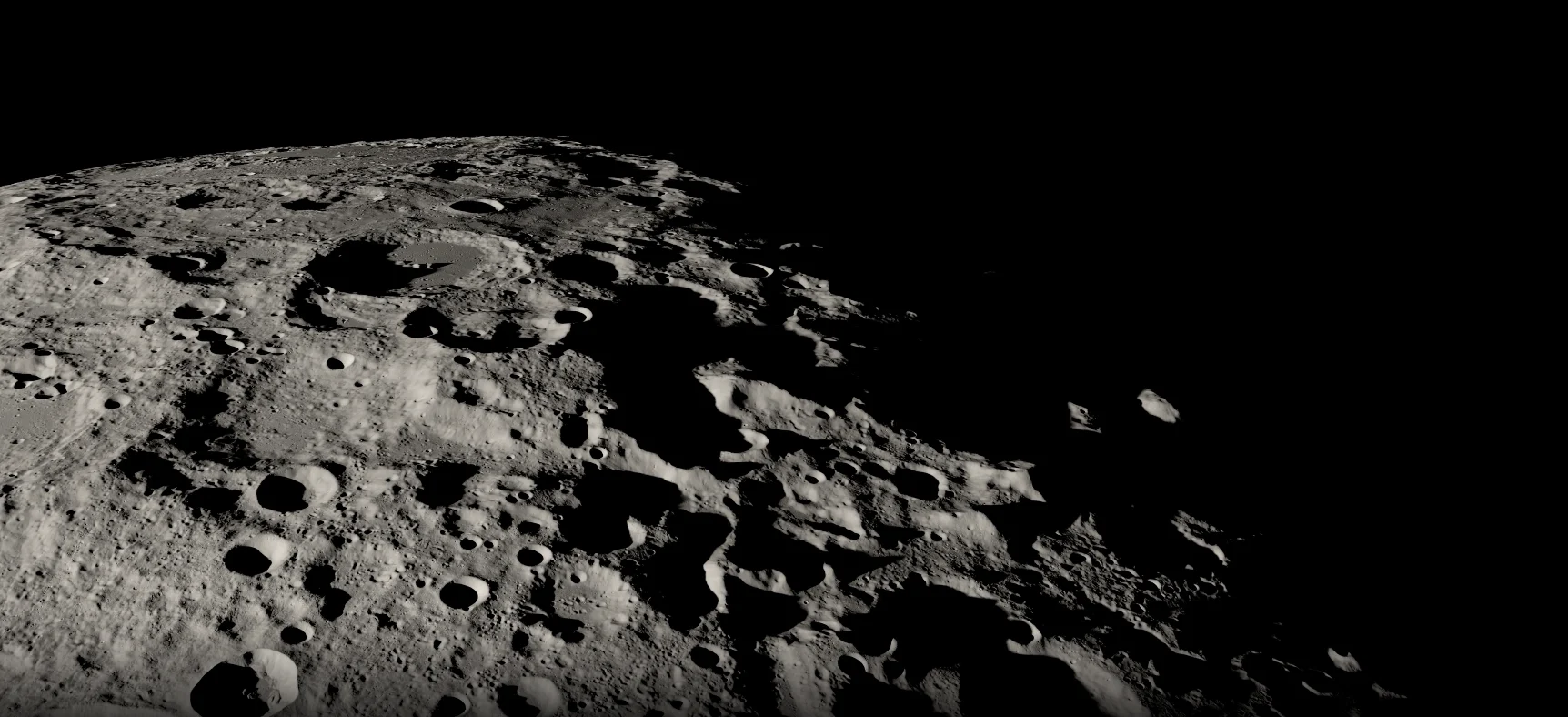
NASA has selected two scientific instruments for deployment by astronauts on the Moon’s surface during the Artemis IV mission. These instruments are designed to be used at the lunar south polar region. Their purpose is to enhance our understanding of the lunar environment, which will support NASA’s ongoing exploration efforts on the Moon and future missions to Mars.
The Artemis IV mission will mark a significant step in lunar exploration by providing valuable data about the Moon’s surface conditions. This information will help NASA prepare for longer-term human presence on the Moon and beyond. The two instruments chosen will be deployed directly by astronauts, allowing for hands-on scientific investigation in the lunar environment.
Details of the Two Selected Instruments for Artemis IV Lunar Surface Science
One of the selected instruments is called DUSTER, which stands for DUst and plaSma environmenT survEyoR. This instrument suite is mounted on a small autonomous rover and is designed to study lunar dust and plasma near the landing site. Lunar dust is known to be highly abrasive and sticks to everything it touches, posing challenges for both human health and equipment durability. The DUSTER investigation aims to characterize the dust and plasma environment and understand how it changes in response to human activity, such as crew exploration and lander liftoff.
The DUSTER instrument suite is led by Xu Wang from the University of Colorado Boulder. It includes the Electrostatic Dust Analyzer (EDA), which measures the charge, velocity, size, and flux of dust particles lofted from the lunar surface. Another component, the Relaxation SOunder and differentiaL VoltagE (RESOLVE), will analyze the average electron density above the surface using plasma sounding. Both instruments will be mounted on a Mobile Autonomous Prospecting Platform (MAPP) rover, provided by Lunar Outpost, a company based in Golden, Colorado, specializing in robotic systems for space exploration. The contract for DUSTER is valued at $24.8 million over three years.
The second instrument is the South Pole Seismic Station (SPSS), which will help scientists study the Moon’s interior structure. By monitoring seismic activity and meteorite impacts, SPSS will provide insights into the geologic processes shaping the Moon. It will also measure the current rate of meteorite impacts and monitor the seismic environment in real time, which is crucial for astronaut safety and mission operations. Additionally, astronauts will conduct an active-source experiment using a “thumper” device to generate seismic energy, allowing detailed surveys of the shallow subsurface near the landing site.
The SPSS instrument is led by Mark Panning from NASA’s Jet Propulsion Laboratory in Southern California. The award for this project is $25 million over three years.
Significance of NASA Selecting 2 Instruments for Artemis IV Lunar Surface Science
NASA’s selection of these two instruments reflects the agency’s commitment to advancing lunar science through human exploration. Joel Kearns, deputy associate administrator for exploration at NASA’s Science Mission Directorate, emphasized that these investigations address science goals identified as strategically important by NASA and the broader scientific community. The integration of these instrument teams into the Artemis IV Science Team highlights the collaborative effort to maximize scientific return from the mission.
While these two payloads have been chosen for further development to fly on Artemis IV, final decisions about the mission’s manifest will be made at a later date. The Artemis program aims to answer high-priority scientific questions best addressed by on-site human explorers and robotic systems working together on and around the Moon. These missions will not only enable scientific discovery but also provide economic benefits and lay the groundwork for the first crewed missions to Mars.
By deploying these instruments on the lunar surface, NASA continues to lead global efforts in understanding the Moon’s environment. This knowledge is essential for protecting human explorers and ensuring the success of future interplanetary missions.
For more information about the Artemis program, visit NASA’s official website at https://www.nasa.gov/humans-in-space/artemis.
For more stories on this topic, visit our category page.
Source: original article.