
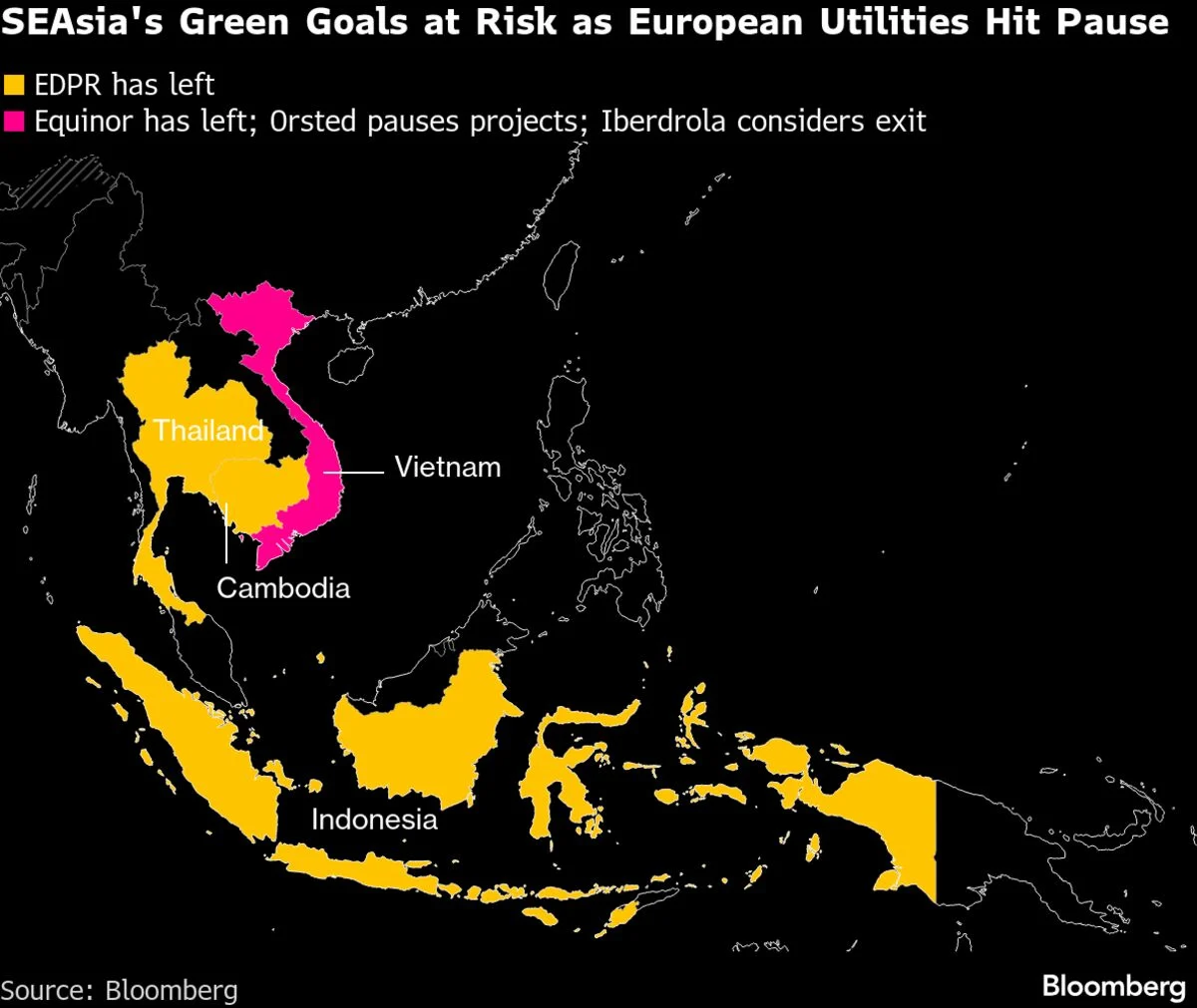
Europe Utilities Rethink Bets Amid Southeast Asia’s Slow Green Transition
Southeast Asia’s slow progress in adopting green energy is causing European utilities to reconsider their investment strategies in the region. Once seen as a promising market for renewable energy, the area’s faltering transition has led to growing frustration among investors. This shift highlights the challenges faced by companies aiming to capitalize on Southeast Asia’s fast-growing energy demand while promoting sustainable solutions.
For years, Southeast Asia attracted significant attention from European utilities due to its rapid economic growth and increasing energy needs. The region’s potential for renewable energy development appeared strong, with abundant natural resources such as solar, wind, and hydropower. However, the pace of the green transition has not met expectations, leading to a reassessment of investment plans by European firms.
The slow adoption of renewable energy in Southeast Asia stems from a variety of factors. Regulatory hurdles, inconsistent policies, and infrastructure limitations have all contributed to delays in project implementation. These obstacles have made it difficult for European utilities to achieve the returns they initially anticipated. As a result, many are now rethinking their bets on the region’s renewable energy market.
Challenges Driving Europe Utilities to Rethink Bets in Southeast Asia
The decision by European utilities to reconsider their investments reflects broader concerns about the viability of renewable energy projects in Southeast Asia. The region’s energy transition has been hampered by slow policy reforms and a lack of clear, long-term commitments from local governments. This uncertainty creates risks for investors who require stable frameworks to support large-scale renewable projects.
In addition to regulatory issues, infrastructure constraints pose significant challenges. Many Southeast Asian countries face difficulties in integrating renewable energy into their existing grids. The lack of adequate transmission and distribution networks limits the ability to scale up green energy production. These technical barriers further complicate efforts by European utilities to expand their presence in the market.
Investor frustration is also fueled by competition from traditional energy sources, which remain dominant in Southeast Asia. Coal and natural gas continue to play a major role in meeting the region’s energy demand. This reliance on fossil fuels slows the transition to renewables and reduces the market share available to green energy developers. European utilities must navigate this complex landscape as they decide whether to maintain or adjust their investment strategies.
Future Outlook for Europe Utilities in Southeast Asia’s Renewable Market
Despite the current challenges, Southeast Asia’s renewable energy market still holds potential for growth. The region’s rising energy consumption and environmental concerns create ongoing demand for cleaner energy solutions. However, European utilities must carefully evaluate the risks and uncertainties before committing further resources.
The need to rethink bets in Southeast Asia is prompting European companies to adopt more cautious and flexible approaches. Some are focusing on smaller, less risky projects or seeking partnerships with local firms to better navigate regulatory environments. Others are exploring alternative markets or technologies that may offer more immediate returns.
In conclusion, the slow green transition in Southeast Asia has led European utilities to reconsider their investment plans in the region. The combination of regulatory, infrastructure, and market challenges has tempered initial optimism. As these companies rethink their bets, they are adapting strategies to balance the region’s potential with the realities of its renewable energy landscape. This cautious approach reflects a broader trend of investors seeking sustainable growth while managing risks in emerging markets.
For more stories on this topic, visit our category page.
Source: original article.