
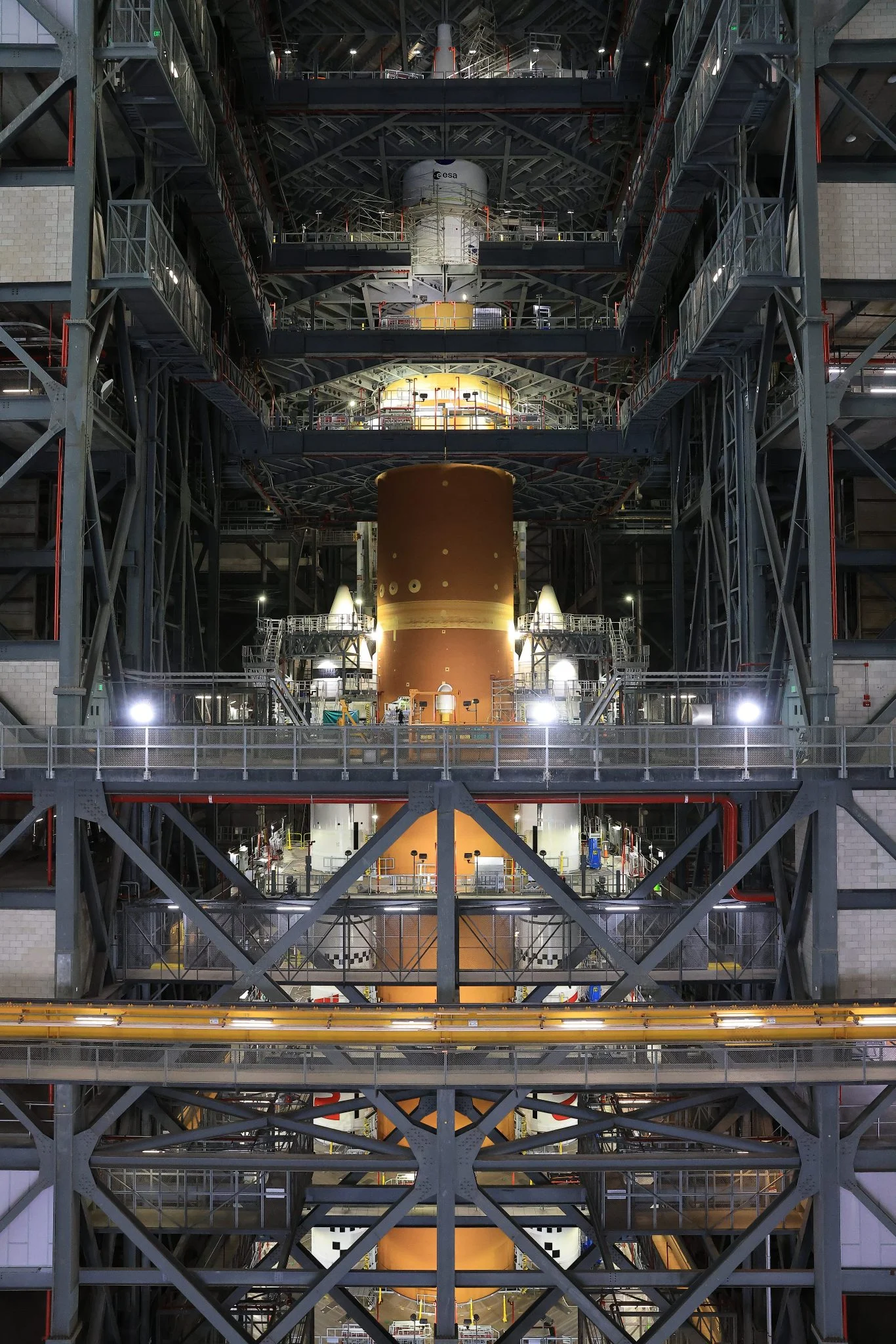
Artemis II Orion Spacecraft Stacked for Upcoming Moon Mission
On October 20, 2025, NASA’s Artemis II Orion spacecraft was stacked atop the agency’s Space Launch System (SLS) rocket inside the Vehicle Assembly Building at Kennedy Space Center in Florida. The spacecraft includes its launch abort system, a critical safety feature designed to protect the crew in case of an emergency during launch.
This stacking marks a significant milestone in the preparation for the Artemis II mission, which is scheduled to take place in early 2026. The mission will last approximately 10 days and will involve a journey around the Moon and back to Earth. This mission is a key step in NASA’s broader Artemis program, which aims to return humans to the lunar surface and eventually send astronauts to Mars.
Crew and Mission Details of the Artemis II Orion Spacecraft
The Artemis II Orion spacecraft will carry a crew of four astronauts. NASA astronauts Reid Wiseman, Victor Glover, and Christina Koch will be joined by Jeremy Hansen from the Canadian Space Agency (CSA). Together, they will embark on this pioneering mission to orbit the Moon.
This mission will test the spacecraft’s systems and capabilities in deep space, paving the way for future lunar landings. The crew will experience the challenges of space travel beyond low Earth orbit, gaining valuable data and experience for upcoming Artemis missions.
Tracking the Artemis II Orion Spacecraft Mission
NASA encourages the public to follow the Artemis II mission through updates on the NASA Artemis blog. This platform will provide ongoing information about the mission’s progress, milestones, and key events as the spacecraft journeys around the Moon and returns to Earth.
The stacking of the Artemis II Orion spacecraft on the SLS rocket is a crucial step toward achieving NASA’s goals for lunar exploration. It demonstrates the agency’s commitment to advancing human spaceflight and expanding our presence beyond Earth. The upcoming mission will not only test new technologies but also inspire future generations interested in space exploration.
For more stories on this topic, visit our category page.
Source: original article.