
Hubble Seeks Clusters in the ‘Lost Galaxy’ NGC 4535
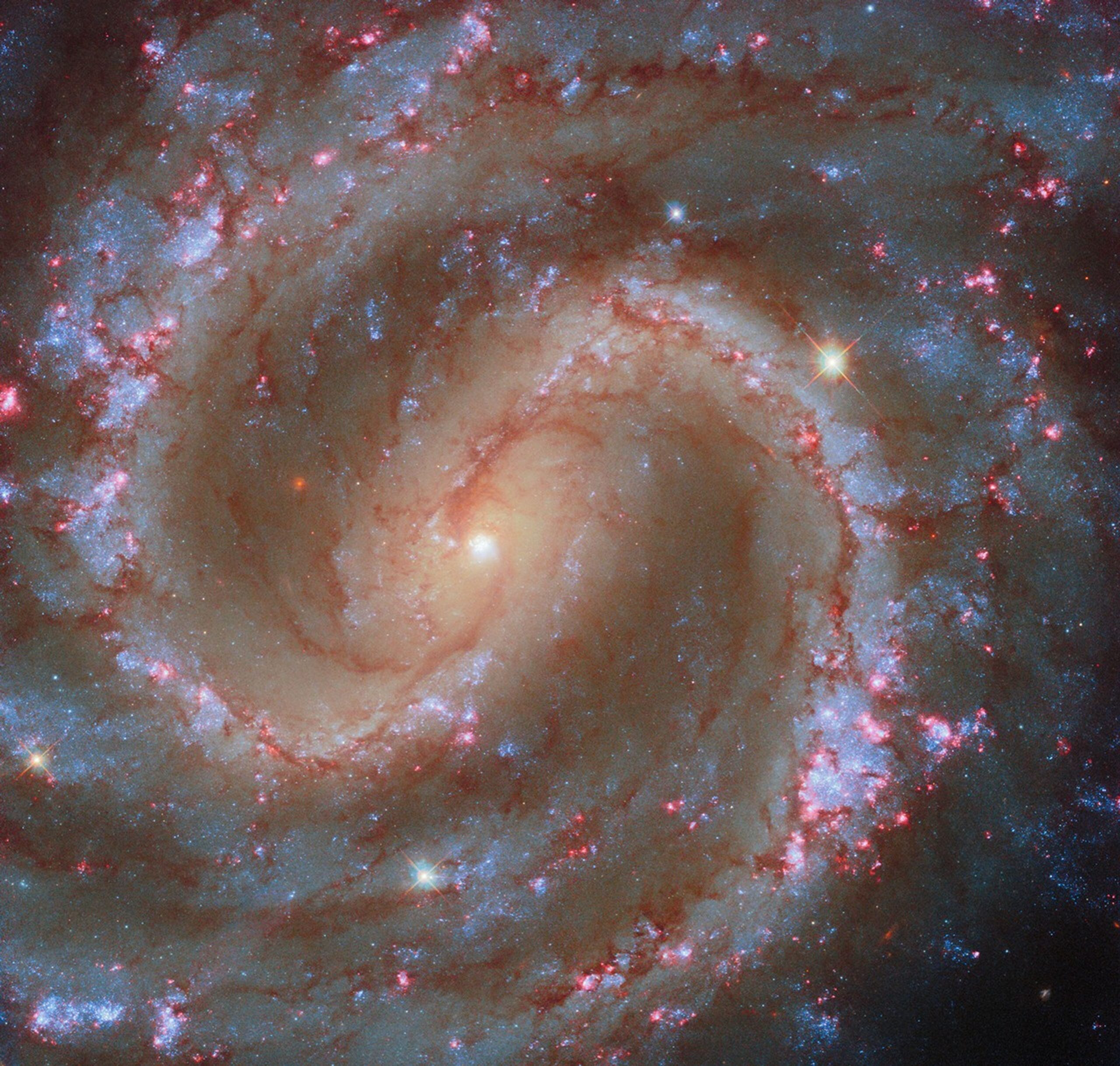
The NASA/ESA Hubble Space Telescope has captured a stunning image of the spiral galaxy NGC 4535, located approximately 50 million light-years away in the constellation Virgo, also known as the Maiden. This galaxy is often called the ‘Lost Galaxy’ because it appears very faint when viewed through small telescopes. Thanks to Hubble’s large mirror, which measures nearly eight feet (2.4 meters) across, and its position above Earth’s atmosphere, the telescope can observe faint galaxies like NGC 4535 with great clarity. This allows Hubble to reveal detailed features such as the galaxy’s expansive spiral arms and its central bar of stars.
The image highlights the young star clusters scattered along NGC 4535’s spiral arms. Many of these bright blue star groupings are surrounded by glowing pink clouds known as H II regions. These H II regions indicate the presence of very young, hot, and massive stars emitting intense high-energy radiation. These massive stars influence their surroundings by heating the clouds from which they were born through powerful stellar winds. Eventually, these stars end their lives in spectacular supernova explosions, further shaping the galaxy’s environment.
Hubble Seeks Clusters in Nearby Star-Forming Galaxies
This latest image is part of a larger observing program aimed at cataloging about 50,000 H II regions in nearby star-forming galaxies, including NGC 4535. The data used in this image comes from the PHANGS observing program, which focuses on understanding the relationship between young stars and cold gas in galaxies. Hubble previously released an image of NGC 4535 in 2021, and both that image and the current one incorporate observations from PHANGS.
The new image adds valuable insight by capturing the bright red glow of the nebulae that surround massive stars during their first few million years of life. This glowing red light reveals the energetic processes occurring as these young stars interact with their birth clouds. By studying these features, scientists gain a better understanding of how star formation shapes the structure and evolution of galaxies like NGC 4535.
Exploring the Universe with Hubble
Hubble’s ability to observe faint galaxies such as NGC 4535 from its vantage point in space has revolutionized our knowledge of the universe. Since its launch in 1990, the Hubble Space Telescope has provided unprecedented views of galaxies, star clusters, and nebulae, deepening our understanding of astrophysics and the life cycles of stars.
The detailed images of star-forming regions in galaxies like NGC 4535 help astronomers study the complex interactions between stars and their environments. These observations contribute to a broader understanding of how galaxies evolve over time. By continuing to seek clusters in galaxies near and far, Hubble remains a vital tool for exploring the cosmos and uncovering the mysteries of the universe.
For more stories on this topic, visit our category page.
Source: original article.