
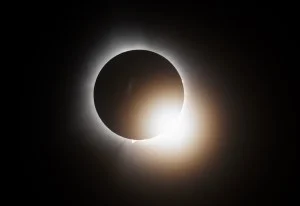
NASA Wins Second Emmy for 2024 Total Solar Eclipse Broadcast
NASA has earned a prestigious Emmy Award for its live broadcast of the April 8, 2024, total solar eclipse. The award, recognizing Excellence in Production Technology, was announced at the 76th Technology & Engineering Emmy Awards held on December 4 in New York City. Walt Lindblom, the coordinating producer, and Sami Aziz, the executive producer, accepted the award on behalf of NASA.
This achievement marks NASA’s second Emmy win for its 2024 total solar eclipse coverage. Earlier in the year, the broadcast also won an Emmy for Outstanding Live News Special at the 46th Annual News & Documentary Emmy Awards. The program was further recognized with a nomination for Outstanding Show Open or Title Sequence – News. In addition to these honors, NASA’s eclipse communications earned two Webby Awards and two Webby People’s Voice Awards.
Complex and Wide-Ranging Broadcast Captivates Millions
NASA’s live coverage of the 2024 total solar eclipse was the most complex live project ever produced by the agency. The broadcast reached nearly 40 million live and replay viewers through NASA’s own platforms, including NASA+, the agency’s free streaming service. Beyond NASA’s channels, the main broadcast was picked up 2,208 times by 568 channels across 25 countries, extending its global reach.
The three-hour broadcast showcased the eclipse as it passed over seven U.S. states and two countries. Eleven hosts and correspondents provided live commentary, interviews, and coverage from various locations such as cities, parks, and stadiums. Viewers around the world tuned in, including at watch parties held in nine locations, ranging from the Austin Public Library to New York’s Times Square. An interactive “Eclipse Board” offered real-time data analysis as the Moon’s shadow moved across North America.
Innovative Technology and Unique Perspectives Highlight the Event
To capture the eclipse from multiple angles, NASA deployed an extensive technical setup. The broadcast utilized 67 cameras, six NASA Wide Area Network control rooms, 38 encoders, and 35 decoders. The team coordinated 20 live telescope feeds from 12 locations along the path of totality.
Adding to the broadcast’s uniqueness, live feeds were received from astronauts aboard the International Space Station and from NASA’s WB-57 high-altitude research aircraft. These perspectives provided rare and extraordinary views of the solar event, including a glimpse of the Sun’s corona.
NASA officials praised the broadcast team for their dedication and hard work. Will Boyington, associate administrator for the Office of Communications at NASA Headquarters, said the team brought joy and wonder about the Sun, Moon, and Earth to audiences worldwide. Nicky Fox, associate administrator for science at NASA Headquarters, highlighted how the broadcast allowed the world to experience the spectacular natural phenomenon through NASA’s eyes.
NASA’s second Emmy win for the 2024 total solar eclipse broadcast reflects the agency’s commitment to sharing the marvels of our solar system with the public. The successful production combined cutting-edge technology, expert coordination, and engaging storytelling to deliver an unforgettable viewing experience.
For more information about NASA, visit https://www.nasa.gov.
For more stories on this topic, visit our category page.
Source: original article.