
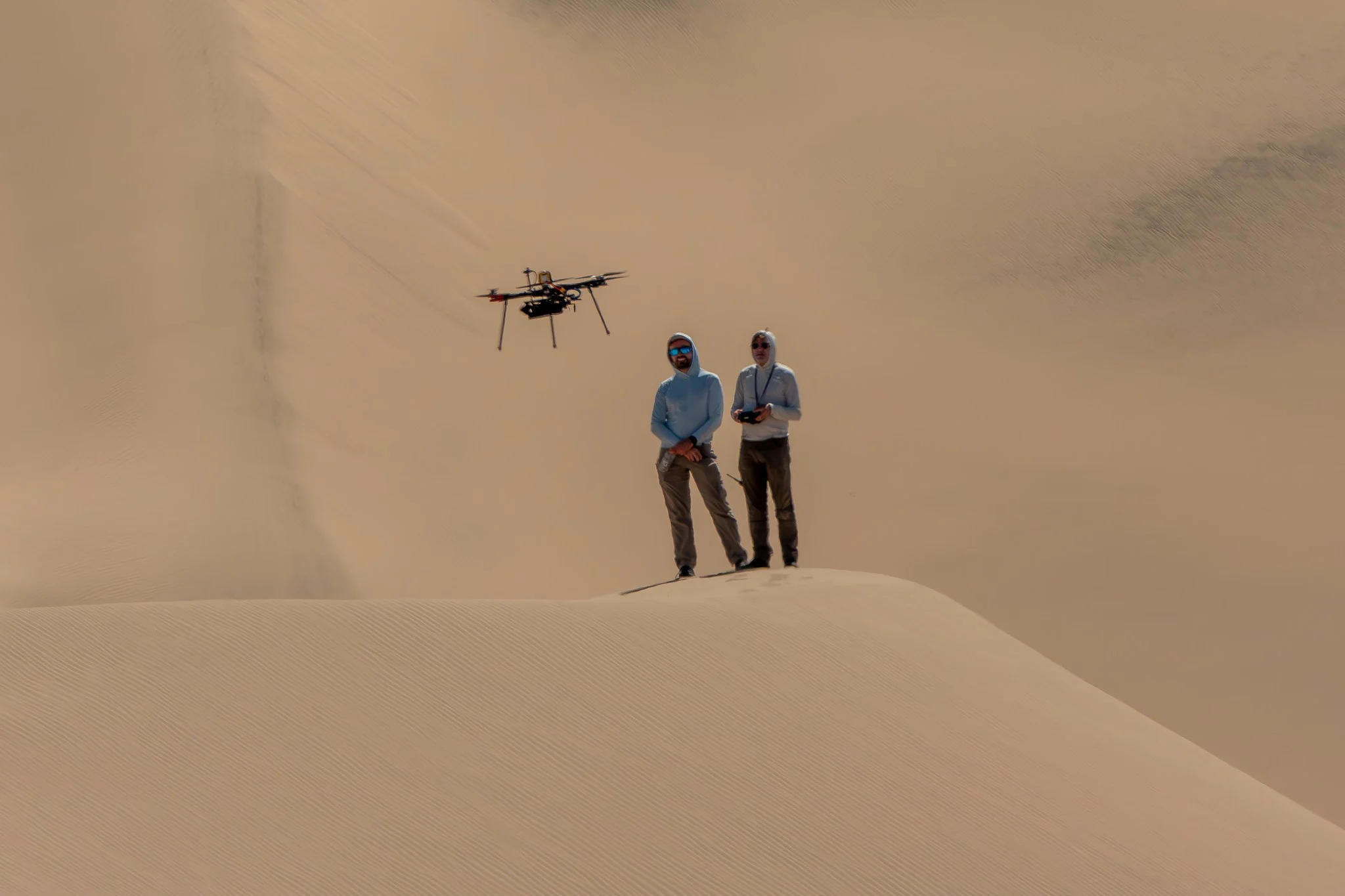
Testing Drones for Mars in the Mojave Desert
In September 2025, researchers from NASA’s Jet Propulsion Laboratory conducted a drone flight test in Dumont Dunes, located in the Mojave Desert. This test was part of a broader campaign aimed at developing advanced navigation software. The software is intended to guide future rotorcraft on Mars, enabling autonomous flight in the challenging Martian environment. This effort is one of 25 projects funded by NASA’s Mars Exploration Program over the past year, all focused on advancing technologies for future missions.
The testing drones for Mars initiative is crucial for preparing robotic explorers that can operate independently on the Red Planet. The navigation software being developed during these tests will allow drones to maneuver safely and efficiently over Mars’ varied terrain. The Mojave Desert’s rugged landscape provides an ideal Earth-based environment to simulate conditions similar to those on Mars, making it a perfect testing ground for these cutting-edge technologies.
Advancing Autonomous Exploration Technologies
The Mars Exploration Program is pushing the boundaries of what robotic explorers can achieve. Beyond drone navigation software, the program supports the development of slope-scaling robotic scouts and long-distance gliders. These technologies are designed to enable robots to explore Mars autonomously, without constant human control. This autonomy is essential for covering vast areas of the planet and conducting scientific investigations in regions that are difficult for humans to reach.
The vision behind these projects is to create robotic systems that can either explore Mars on their own or assist astronauts in their work. By developing reliable navigation and flight capabilities, NASA aims to enhance the safety and efficiency of future missions. The ability for drones and other robotic vehicles to operate independently will be a significant step forward in Mars exploration.
Significance of Testing Drones for Mars
Testing drones for Mars in environments like the Mojave Desert is a vital part of NASA’s strategy to prepare for future planetary exploration. The flight tests in Dumont Dunes help researchers refine the software and hardware needed for rotorcraft to function on Mars. Each successful test brings NASA closer to deploying drones that can navigate the Martian atmosphere and terrain effectively.
These efforts are part of a larger vision to expand robotic capabilities and support human exploration. The technologies developed through the Mars Exploration Program will not only improve robotic missions but also provide valuable tools for astronauts working on Mars. As NASA continues to fund and support these innovative projects, the goal of autonomous exploration on Mars becomes increasingly achievable.
For more stories on this topic, visit our category page.
Source: original article.