
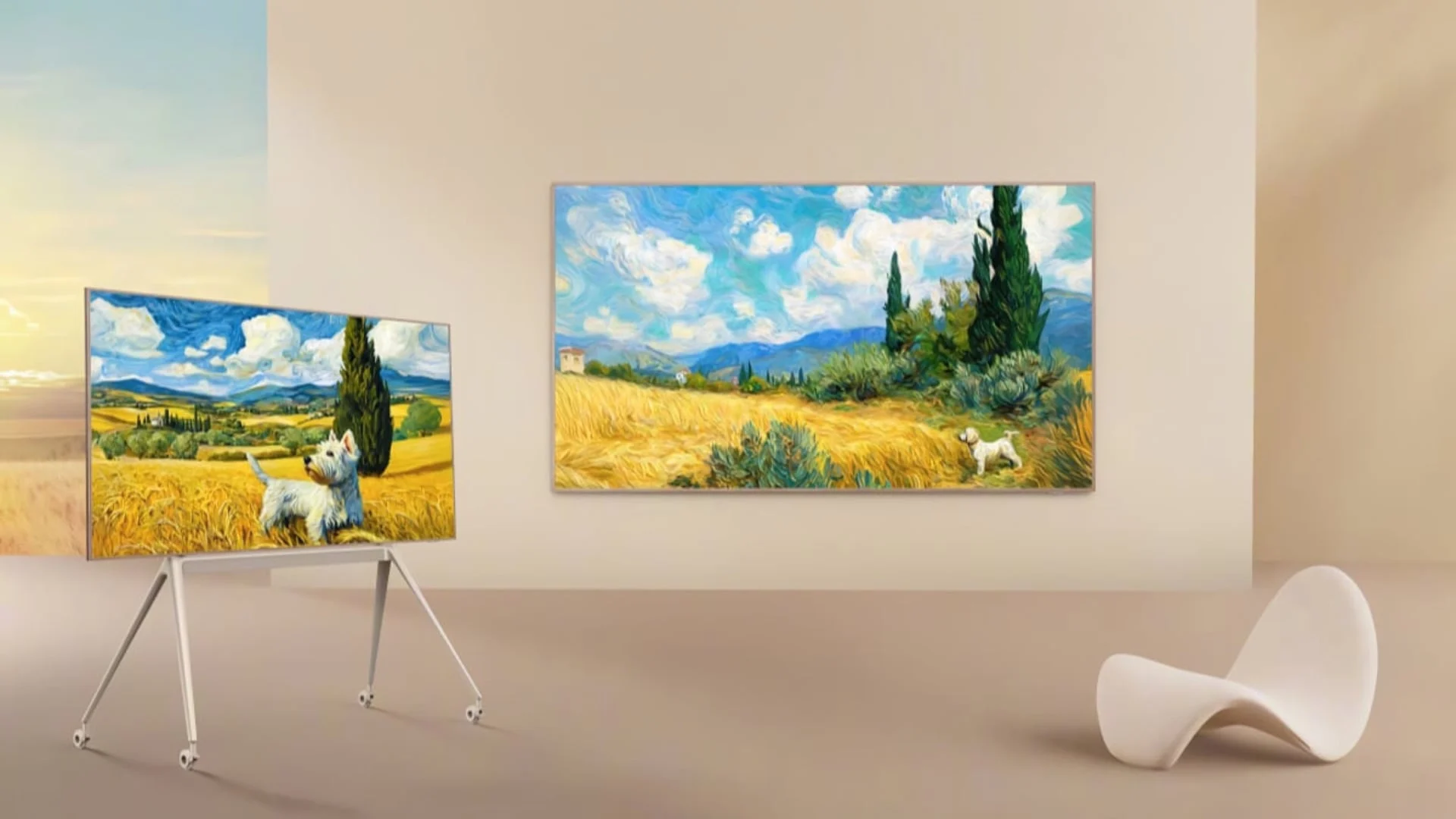
TCL’s New Art TV Sets a Higher Standard
Earlier this year, Samsung introduced a premium version of its popular The Frame TV called The Frame Pro. This model features a Neo QLED display and offers slightly improved picture quality compared to the regular Frame model. However, many feel that the enhancements do not fully justify the higher price or the “Pro” label.
In contrast, TCL has recently launched its new art TV, the Nxtvision A400 Pro, in China. This new TCL model showcases what a true high-end art TV should be. Samsung could learn from TCL’s approach when developing the next generation of The Frame Pro.
Features of TCL’s New Art TV
TCL’s new art TV uses a Quantum Dot display combined with proper Mini-LED backlighting, delivering 4K resolution and a smooth 144Hz variable refresh rate. The screen is coated with an anti-glare layer made from AG-25 nanocrystal material. According to TCL, this coating creates a soft yet detailed appearance reminiscent of a classic oil painting. The TV supports multiple HDR formats, including Dolby Vision, HDR10, HDR10+, and HLG.
For gamers, the TCL art TV includes features such as Auto Low Latency Mode (ALLM), AMD FreeSync Premium Pro, Variable Refresh Rate (VRR), and HDMI 2.1 ports, ensuring a seamless gaming experience. The audio system is powered by Onkyo Hi-Fi Audio and supports Dolby Atmos and DTS:X formats for immersive sound. Connectivity options include Wi-Fi 6, Bluetooth, and multiple HDMI 2.1 ports.
Under the hood, the TV runs on a quad-core Cortex-A78 CPU paired with a Mali-G52 MC1 GPU. It comes with 4GB of RAM and 64GB of internal storage, providing ample space for apps and content.
Design and Availability
Measuring just 39.9mm thick, TCL’s new art TV is designed to be mounted flush against a wall, leaving virtually no gap. The frame comes in beige and white color options, enhancing its resemblance to a framed painting or piece of artwork. Additionally, the TV includes a stand with wheels, allowing easy movement between rooms.
To further emphasize its artistic appeal, TCL has preloaded over a hundred classic and dynamic artworks on the TV. The Nxtvision A400 Pro is available in a wide range of sizes: 55-inch, 65-inch, 75-inch, 85-inch, and 98-inch models.
How TCL’s New Art TV Compares to Samsung’s The Frame Pro
Samsung’s The Frame Pro uses a Quantum Dot panel with edge-lit Mini-LED backlighting. Unlike other Neo QLED TVs that feature full-array local dimming with hundreds of dimming zones, The Frame Pro relies on edge-lit backlighting. This design limits local dimming control, resulting in lower peak brightness and noticeable halo effects around bright objects on the screen.
Many critics believe Samsung should have equipped The Frame Pro with a proper Mini-LED panel featuring full-array local dimming to deliver superior picture quality. Instead, it appears Samsung opted for cost-cutting measures. As a result, the “Pro” tag seems undeserved. Additionally, The Frame Pro only has 4GB of storage, which is quite low for a high-end television.
Looking ahead, Samsung plans to release a 98-inch version of The Frame in 2026. It is possible that The Frame Pro will also be available in this size. Fans hope that the 2026 model will include a true Neo QLED display with full-array local dimming, increased RAM and storage, and improved speakers to better compete with TCL’s new art TV.
In summary, TCL’s new art TV raises the bar for what an art-focused television should offer. With its advanced Mini-LED technology, superior design, and rich features, it clearly shows what Samsung’s The Frame Pro should have been. Samsung will need to step up its game in future releases to match or surpass TCL’s impressive offering.
For more stories on this topic, visit our category page.
Source: original article.