
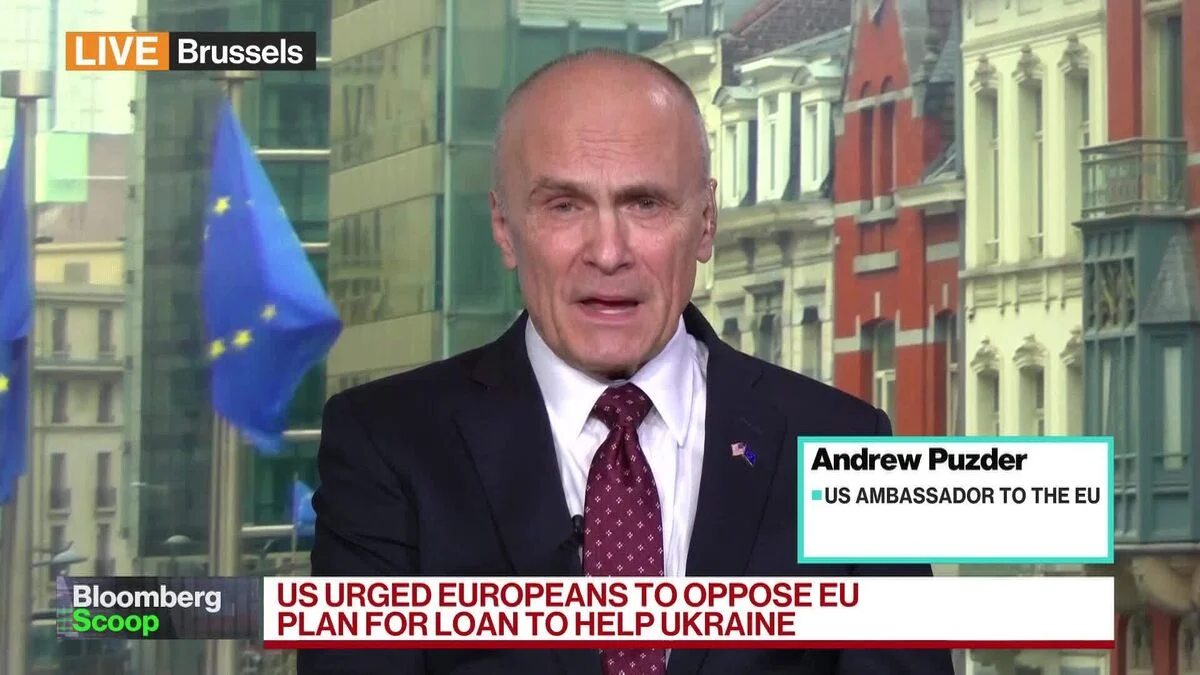
Puzder Says EU AI Regulations Hinder Cooperation and Investment
Andrew Puzder, the US Ambassador to the European Union, has expressed concerns about the impact of EU regulations on the development of artificial intelligence. He stated that some of the regulatory measures introduced by the EU are actually counterproductive to the region’s economic interests. According to Puzder, these regulations create obstacles that make it challenging to attract the necessary investment for Europe to fully engage in the AI economy.
Puzder’s comments came during an appearance on “The Pulse with Francine Lacqua” on Bloomberg TV. He emphasized that the current regulatory environment in the EU is not conducive to fostering innovation and growth in the AI sector. By imposing strict rules, the EU risks falling behind in the global AI race, as investors may be reluctant to commit funds under such restrictive conditions.
Challenges to AI Development Highlighted by Puzder
The US Ambassador highlighted that the EU’s regulatory framework is at odds with its goal of economic progress in the AI field. He pointed out that these regulations could deter companies and investors from participating in AI projects within Europe. This reluctance to invest could slow down technological advancements and limit Europe’s competitiveness in the AI market.
Puzder’s concerns reflect a broader debate about how best to regulate emerging technologies without stifling innovation. He suggested that the EU’s approach may need to be reconsidered to strike a better balance between regulation and economic growth. Without such adjustments, Europe might struggle to keep pace with other regions that are more welcoming to AI investment.
Implications of Puzder’s Views on EU AI Regulation
Puzder says EU AI regulations are making cooperation difficult, particularly when it comes to attracting investment. His remarks underline the tension between regulatory oversight and the need for a dynamic AI ecosystem. The ambassador’s perspective suggests that the EU’s current policies could inadvertently hamper the continent’s ability to lead in AI development.
In summary, Andrew Puzder warns that the EU’s regulatory acts, while perhaps well-intentioned, may ultimately hinder the region’s participation in the AI economy. By making it harder to secure investment, these rules could slow Europe’s progress in this critical technological area. His statements call for a careful reassessment of how AI is regulated in the EU to ensure that economic interests and innovation are not compromised.
For more stories on this topic, visit our category page.
Source: original article.