
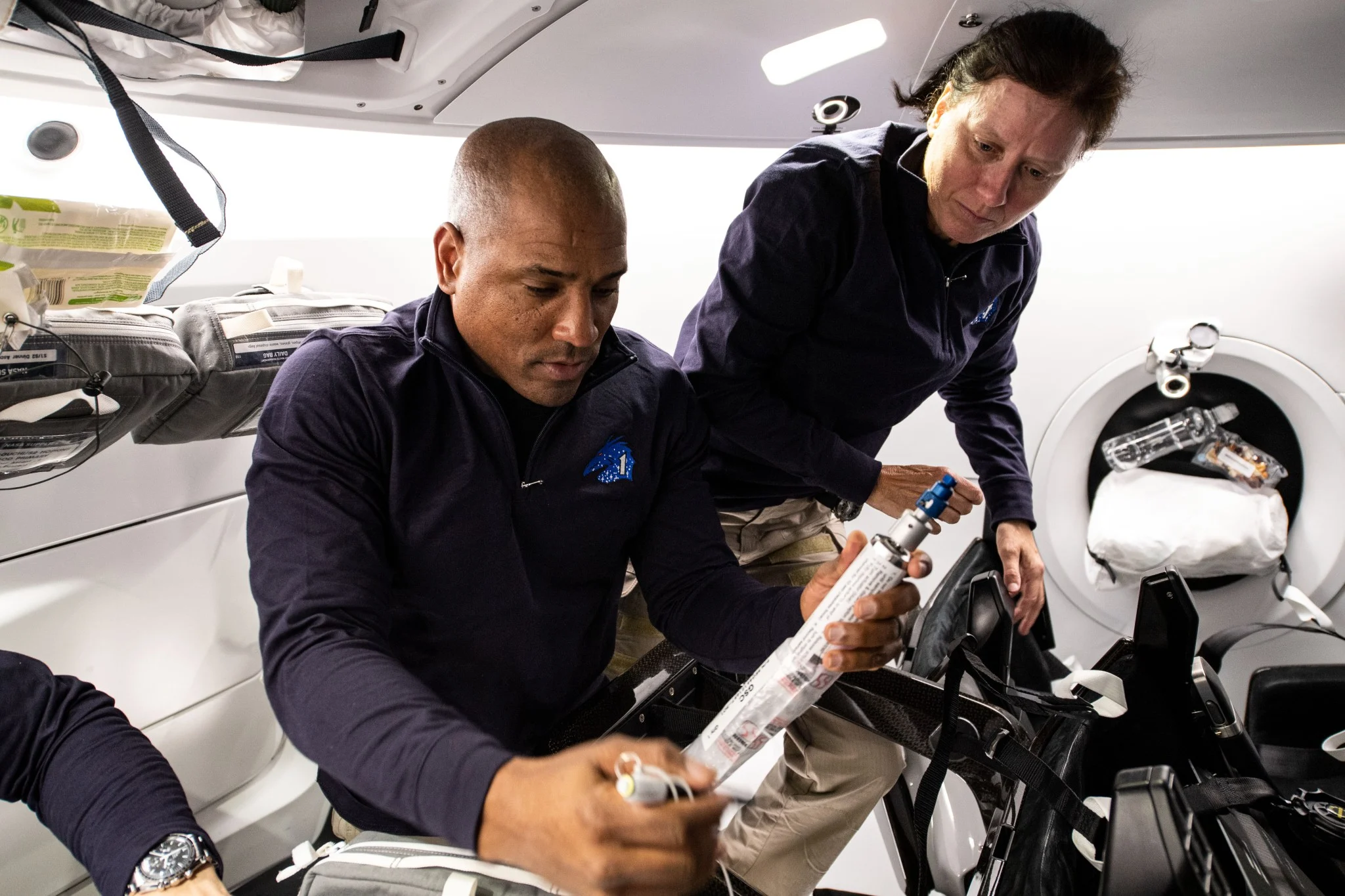
Toxicology Analysis of Spacecraft Air: Monitoring Environmental Safety on the ISS
The Toxicology and Environmental Chemistry (TEC) team plays a crucial role in ensuring the safety of the International Space Station (ISS) environment by monitoring airborne contaminants in both spacecraft air and water. Their work involves continuous real-time monitoring as well as detailed post-flight analyses to maintain a safe atmosphere for astronauts aboard the ISS.
TEC employs several in-flight monitoring instruments to provide immediate data on environmental conditions. These include Air Quality Monitors (AQM), carbon dioxide (CO2) sensors, and a compound-specific analyzer designed to detect combustion products (CSA-CP). For water quality, real-time monitoring tools such as the colorimetric water quality monitoring kit (CWQMK) and the ISS total organic carbon analyzer (TOCA) are used. These instruments help detect any harmful substances promptly, ensuring that the air and water remain safe for crew members during missions.
Methods of Toxicology Analysis of Spacecraft Air and Water
In addition to real-time monitoring, TEC collects archival samples of air and water at specific times and locations during missions. These samples are returned to Earth for comprehensive laboratory analysis. Air samples are gathered using “grab sample containers” (GSC) and formaldehyde badges, which capture the air quality at different points in the mission timeline.
Water aboard the ISS is recycled through sophisticated recovery systems operated by both the U.S. and Russian segments of the station. These systems process atmospheric moisture and, in the U.S. system, urine distillate to produce clean, potable water for the crew. To verify the quality of this recycled water, archival samples are collected using the Water Kit and sent back to Earth for detailed examination. Additionally, samples of condensate and wastewater are analyzed to detect any contaminants that might bypass the water recovery systems, ensuring the water remains safe for consumption.
Post-Flight Analysis and Reporting on Spacecraft Air Quality
After missions conclude, TEC conducts thorough post-flight analyses on the archived air and water samples. These analyses provide a detailed characterization of the environmental conditions experienced during the mission. Reports documenting these findings are regularly published, covering various mission increments and spacecraft ingress and egress events.
The reports include data from numerous missions, such as SpaceX Crew Dragon flights, Boeing-CFT ascents, and cargo deliveries by vehicles like HTV and Orbital ATK. They also investigate specific anomalies, such as benzene detection or odors, and contingency events related to air quality. These comprehensive reports serve as a vital resource for understanding the spacecraft environment and guiding improvements in life support systems.
By combining real-time monitoring with meticulous post-flight toxicology analysis of spacecraft air and water, NASA’s TEC team ensures that astronauts aboard the ISS have a safe and healthy environment. This ongoing vigilance is essential for the success of current missions and for preparing future long-duration spaceflights.
For more stories on this topic, visit our category page.
Source: original article.