
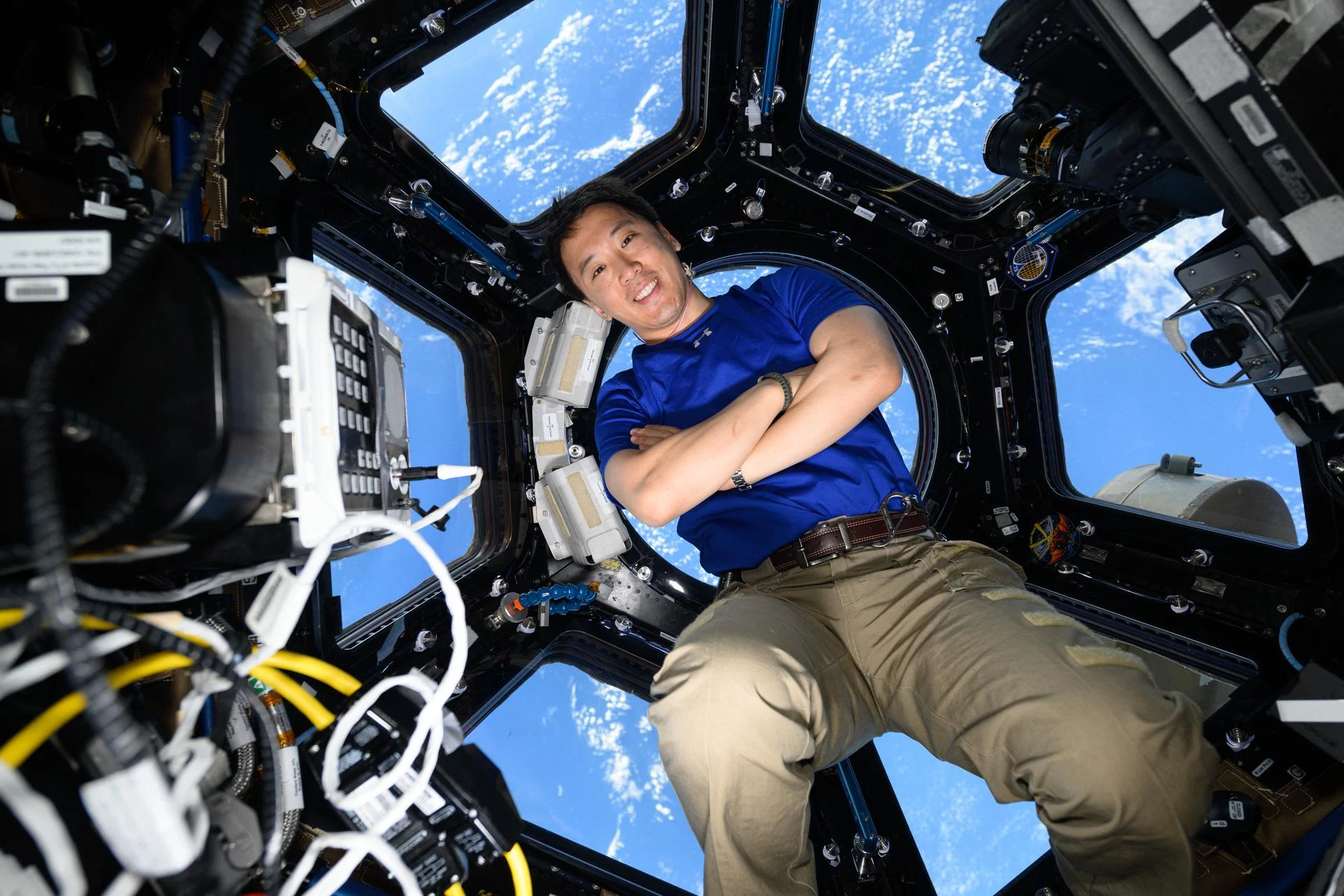
NASA Astronaut Jonny Kim Advances Research Aboard Space Station
NASA astronaut Jonny Kim is concluding his first mission aboard the International Space Station (ISS) in early December. During his time in orbit, Kim carried out numerous scientific experiments and technology demonstrations. These efforts aim to benefit humanity on Earth and support NASA’s Artemis campaign, which prepares for future human missions to Mars.
Throughout his mission, Kim focused on a variety of research areas, ranging from medical studies in microgravity to innovative technology tests. His work aboard the ISS contributes to advancing knowledge that will be crucial for long-duration space exploration and improving life on Earth.
Medical and Biological Research by NASA Astronaut Jonny Kim
As a medical doctor, NASA astronaut Jonny Kim performed several routine medical examinations while on the ISS. These check-ups included blood tests, eye exams, and ultrasounds, all monitored by NASA flight surgeons and researchers. One important focus was the ultrasound of his eye, which helps study spaceflight-associated neuro-ocular syndrome (SANS). This condition involves changes to the eye’s structure and vision due to long-duration spaceflight.
Kim also drew blood from fellow crew members to analyze various health indicators. These samples provide valuable insights into cartilage and bone health, cardiovascular function, inflammation, stress, immune response, and nutritional status. Regular medical exams before, during, and after spaceflight help monitor astronaut health and improve tools for future missions to the Moon and Mars.
In addition to human health studies, Kim contributed to plant growth research. He photographed dwarf tomato sprouts grown with a nutrient supplement instead of relying solely on photosynthesis. The plants received an acetate supplement as a secondary nutrition source, which may enhance growth and yields while using less power and fewer resources aboard the space station and future spacecraft.
Technology Demonstrations and Space Exploration Innovations
NASA astronaut Jonny Kim also engaged in several technology demonstrations aimed at supporting future space exploration. One such project involved using a ham radio to communicate with students on Earth. This educational program connects students worldwide with astronauts aboard the ISS, allowing them to learn about life in space and the experiments conducted in microgravity. The initiative encourages interest in STEM fields and inspires the next generation of space explorers.
Kim participated in an experiment testing the encoding, transmission, and decoding of encrypted information using DNA sequences. This research evaluates the stability of DNA-based data storage in the space environment. Using DNA for data storage could reduce weight and energy requirements compared to traditional methods, benefiting long-duration missions and Earth-based industries.
Another technology demonstration involved remotely controlling robots on Earth from the ISS. This investigation aims to improve human-robot interaction for future missions to the Moon, Mars, and beyond. Kim’s work helps fine-tune the operating dynamics between astronauts and robotic systems in deep space exploration.
Advancing Space Medicine and Manufacturing
NASA astronaut Jonny Kim conducted an investigation into the effects of microgravity on bone marrow stem cells. The study focused on how these cells secrete proteins that form and dissolve bone. Bone loss is a significant health concern for astronauts due to weightlessness, and this research explores whether blocking certain signals could protect astronauts during long missions. The findings may also lead to treatments for bone loss caused by aging or disease on Earth.
Kim tested new hardware designed to increase the production of crystals and commercially relevant materials, such as golden nanospheres. These tiny gold particles have applications in optics, electronics, medication delivery, and diagnostics. The experiment aimed to produce larger, more uniform nanospheres in space than those made on Earth.
In another investigation, Kim worked on producing nutrient-rich yogurt and kefir using bioengineered yeasts and probiotics. The process includes a food-grade pH indicator that allows astronauts to visually monitor fermentation. This research addresses the challenge of nutrient degradation during long-term storage of foods and supplements in space.
Kim also studied how high-concentration protein fluids behave in microgravity using the Microgravity Science Glovebox. This research supports the development of more accurate models for manufacturing processes in space and on Earth. It also contributes to creating next-generation medicines for treating cancers and other diseases.
Observing Earth and Supporting Disaster Response
On September 28, 2025, NASA astronaut Jonny Kim photographed Hurricane Humberto from the ISS. Orbiting approximately 250 miles above Earth, the station offers a unique vantage point to capture images of hurricanes, dust storms, fires, and other large-scale events. These images help document natural disasters and assist first responders on the ground.
Through his diverse research and outreach activities, NASA astronaut Jonny Kim has made significant contributions during his mission aboard the International Space Station. His work not only advances space exploration but also supports scientific progress that benefits people on Earth.
For more stories on this topic, visit our category page.
Source: original article.