
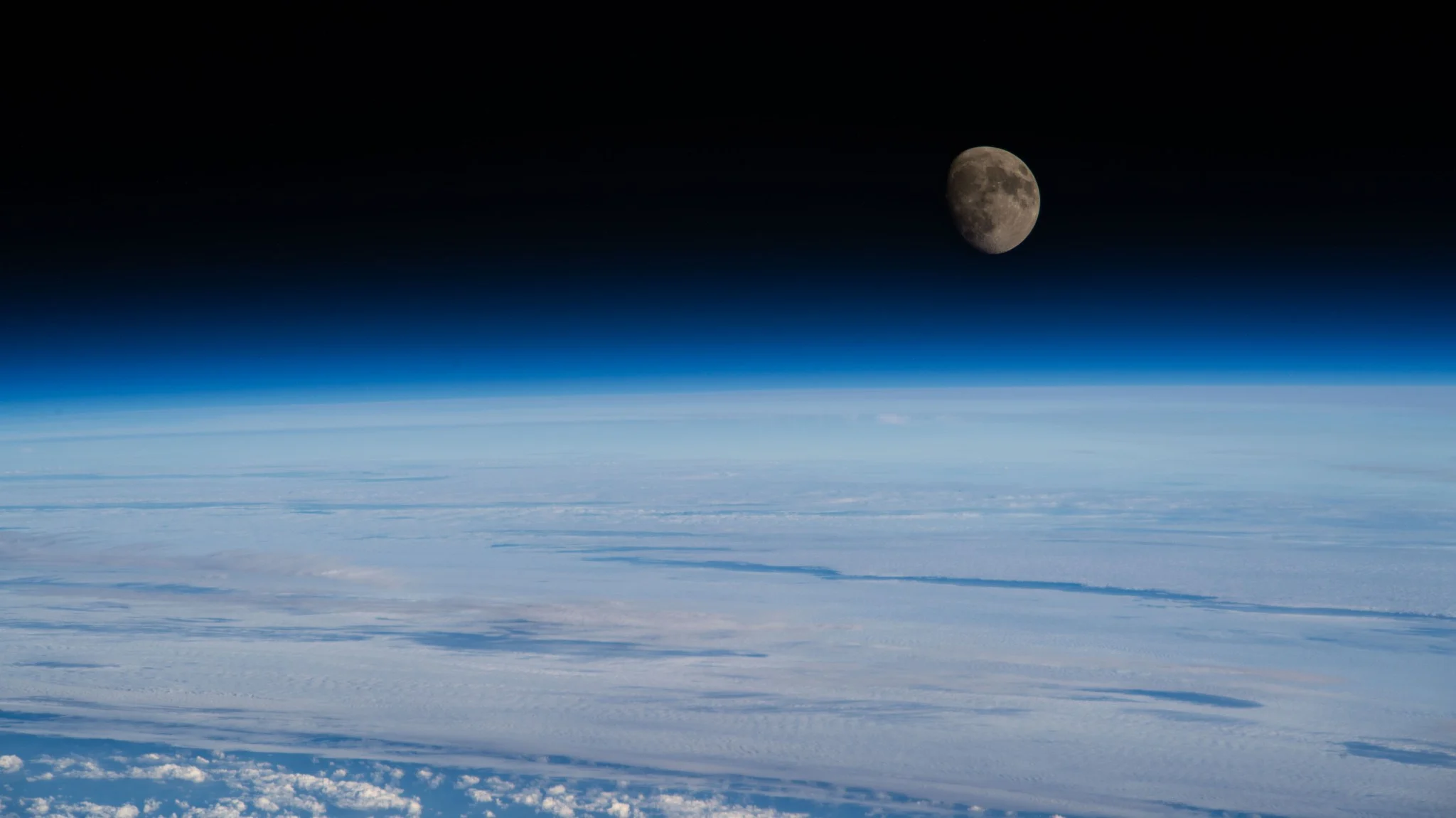
The Waxing Gibbous Moon Seen from Space
A stunning photograph captured from the International Space Station on October 3, 2025, shows the waxing gibbous moon rising above Earth’s blue atmosphere. At the time, the station was orbiting 263 miles above a cloudy Atlantic Ocean near the coast of Quebec, Canada. This image beautifully illustrates the moon’s position and appearance during this particular phase.
Understanding the Waxing Gibbous Moon and Moon Phases
In our solar system, the Sun is the only object that produces its own light. This sunlight travels through space and shines on both Earth and the Moon. As the Moon orbits Earth, the Sun’s light illuminates half of the Moon’s surface. The light that reflects off the Moon’s surface is what we see as moonlight here on Earth.
The Moon goes through different phases depending on how much of its illuminated half is visible from Earth. Sometimes the entire face of the Moon shines brightly, while at other times, only a thin crescent of light is visible. There are also moments when the Moon appears to vanish completely from view. These changes in appearance are known as Moon phases.
The waxing gibbous moon is the phase that occurs just before the full moon. During this time, more than half of the Moon’s face is illuminated, but it is not yet fully bright. The waxing gibbous moon gradually grows larger each night until it reaches the full moon stage.
The Significance of the Waxing Gibbous Moon
The waxing gibbous moon is an important and easily recognizable phase in the lunar cycle. It marks the transition from the first quarter moon to the full moon. As the Moon moves through this phase, it appears to grow in size and brightness in the night sky.
This phase is a reminder of the constant movement and changing perspectives we experience with our closest celestial neighbor. Observing the waxing gibbous moon allows us to connect with the natural rhythms of the Earth-Moon system and appreciate the beauty of the lunar cycle.
In summary, the waxing gibbous moon is a phase where the Moon’s illuminated portion is increasing, leading up to the full moon. The photograph taken from the International Space Station offers a unique view of this phase, showing the Moon rising above Earth’s atmosphere over the Atlantic Ocean near Quebec. Understanding the waxing gibbous moon helps us better appreciate the dynamic nature of the Moon’s phases and the light it reflects from the Sun.
For more stories on this topic, visit our category page.
Source: original article.