
The International Space Station Celebrates 25 Years of Continuous Human Presence
On November 2, 2025, NASA commemorated 25 years of uninterrupted human presence aboard the International Space Station. What started as a fragile assembly of modules has grown into a vital platform for international collaboration, cutting-edge scientific research, and technology demonstrations. The station has also played a key role in developing a low Earth orbit economy and supporting NASA’s ambitious plans for crewed missions to the Moon and Mars.
The International Space Station: A Legacy of Exploration and Cooperation
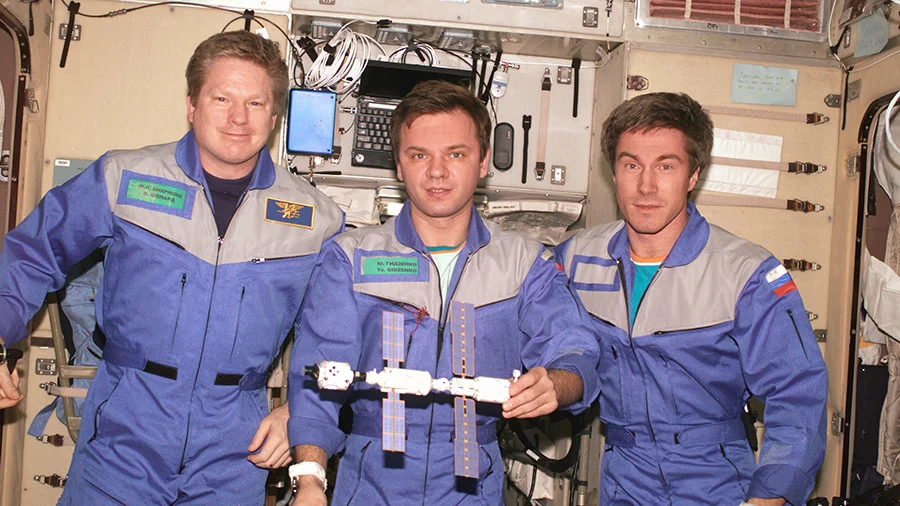
The journey began with the arrival of the first crew on November 2, 2000. Expedition 1 included NASA astronaut William M. Shepherd and Russian cosmonauts Yuri P. Gidzenko and Sergei K. Krikalev from the Russian Aviation and Space Agency, now known as Roscosmos. They launched from the Baikonur Cosmodrome in Kazakhstan two days earlier. After successfully docking, the crew entered the station and started activating its systems. Their main tasks during the four-month mission involved installing and turning on life support and communications systems. They also worked with three visiting space shuttle crews to continue assembling the station. The trio returned to Earth in March 2001 aboard space shuttle Discovery, handing over the station to Expedition 2.
Spacewalks: Essential for Assembly, Maintenance, and Research
The assembly and upkeep of the International Space Station rely heavily on the skilled work of astronauts performing spacewalks. These operations are carried out in bulky spacesuits under the harsh conditions of space. Spacewalks not only maintain the station but also serve as a testing ground for spacesuits and tools, providing crucial data for future missions to the Moon and Mars. Some spacewalks have supported scientific research, such as the January 2025 mission where crew members collected samples to study whether microorganisms can survive after exiting the station vents. This research helps improve spacecraft design to prevent contamination of Mars and other destinations.
Over the past 25 years, more than 270 spacewalks have been conducted in support of the station. Several have made history. In May 1999, NASA astronaut Tamara Jernigan became the first woman to perform a spacewalk at the station during its construction. In September 2000, NASA astronaut Edward T. “Ed” Lu and Roscosmos cosmonaut Yuri I. Malenchenko carried out the first U.S.-Russian spacewalk. On March 10, 2001, NASA astronauts James Voss and Susan Helms set the U.S. record for the longest spacewalk, lasting 8 hours and 56 minutes.
International partners also made significant contributions with their first spacewalks: Canadian astronaut Chris Hadfield in April 2001, Japanese astronaut Soichi Noguchi in July 2005, and European astronaut Thomas Reiter in August 2006. Other milestones include the first spacewalk with no one inside the station by NASA astronaut Mike Foale and Russian cosmonaut Aleksandr Y. Kaleri on February 26, 2004, and the first all-female spacewalk by NASA astronauts Christina Koch and Jessica Meir on October 18, 2019.
Commercial Crew and Record-Breaking Missions
The International Space Station welcomed its first commercial crew on May 31, 2020. Former NASA astronauts Robert Behnken and Douglas Hurley joined Expedition 63 Commander Chris Cassidy and Roscosmos cosmonauts Anatoly Ivanishin and Ivan Vagner aboard the station. Behnken and Hurley had launched from Kennedy Space Center the day before on NASA’s SpaceX Demo-2 test flight, marking the first launch of American astronauts from U.S. soil since the space shuttle’s retirement in 2011.
During their 62 days aboard the station, Behnken and Hurley integrated seamlessly with the crew. They participated in numerous scientific experiments, spacewalks, and public engagement activities. Overall, they spent 64 days in orbit, completed 1,024 Earth orbits, and contributed over 100 hours supporting the station’s research before returning to Earth on August 2. The success of Demo-2 paved the way for regular SpaceX flights to and from the station, increasing research opportunities and advancing preparations for human exploration of the Moon and Mars.
Another remarkable milestone was set by NASA astronaut Frank Rubio, who returned to Earth on September 27, 2023, after spending 371 days aboard the station. This was the longest single spaceflight by a U.S. astronaut, surpassing the previous record of 355 days held by Mark Vande Hei. Rubio’s mission offered scientists an unprecedented look at how the human body adapts to extended periods in microgravity.
Rubio supported six human research studies focusing on diet, exercise, physiology, and psychology. He was the first astronaut to test whether limited workout equipment could maintain health and fitness, a critical consideration for future spacecraft with smaller living spaces. He also contributed biological samples and data for NASA’s Spaceflight Standard Measures study, which collects health information to better prepare crews for Artemis missions to the Moon and future journeys to Mars. Alongside his fellow crew members, Rubio took part in numerous investigations and technology demonstrations, including growing tomato plants using hydroponic and aeroponic methods and conducting materials science experiments to improve spacecraft design.
A Global Partnership for Science and Exploration
The International Space Station stands as one of the most ambitious international collaborations ever undertaken. It unites flight crews from around the world, multiple launch vehicles, distributed launch and flight operations, training, engineering, development facilities, communications networks, and the global scientific community. This partnership benefits all humanity.
The station is operated by an international coalition of space agencies: NASA, Roscosmos, ESA (European Space Agency), JAXA (Japan Aerospace Exploration Agency), and CSA (Canadian Space Agency). Each partner manages the station hardware it provides and supports on-Earth construction, launch operations, mission control, communications, and research facilities.
Over 25 years, at least 290 individuals from 26 countries and the five international partners have visited the orbiting laboratory. Some visitors arrived on private astronaut missions, which contribute to scientific, outreach, and commercial activities. These missions demonstrate demand for future commercial space stations and are a key part of NASA’s strategy to foster a competitive commercial economy in low Earth orbit.
The achievements of the International Space Station and its international partnership exemplify how countries can collaborate to overcome complex challenges and reach shared goals. This foundation continues to support humanity’s next great steps in space exploration.
For more stories on this topic, visit our category page.
Source: original article.