
Cranberry Country Wisconsin: A Leading Producer of Cranberries
Wisconsin, famously known as America’s Dairyland for its cheese production, holds another significant title. The state is the leading producer of cranberries in the United States. In fact, Wisconsin’s annual cranberry harvest accounts for more than half of the country’s total cranberry yield. This remarkable achievement highlights the importance of cranberry farming in the state’s agricultural landscape.
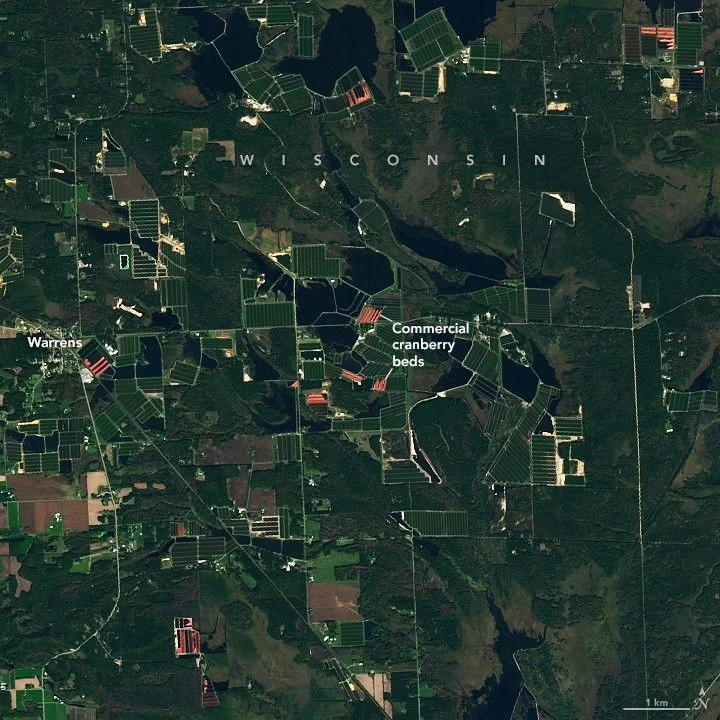
The success of cranberry cultivation in Wisconsin is largely due to the region’s natural environment. The wetlands, cool climate, and sandy, acidic soils found in central and northern Wisconsin create ideal conditions for growing cranberries. Near the town of Warrens, known as the “Cranberry Capital of Wisconsin,” geometric networks of cranberry beds stretch alongside small lakes. These beds are carefully managed to produce the tart berries that are a staple in many Thanksgiving menus.
Harvesting and Cultivation Practices in Cranberry Country Wisconsin
Cranberry harvesting in Wisconsin involves a unique process. When the berries are ripe, growers flood the fields with up to a foot of water. Specialized machines then knock the fruit off the vines. Because cranberries contain air pockets, they float to the surface, turning entire flooded fields bright red. The floating berries are then gathered and removed. Not all cranberry beds are flooded at the same time; satellite images taken throughout the fall show different areas turning red at various times during the harvest season.
Cranberries are native to Wisconsin’s marshes, and Native Americans have harvested them for centuries. Commercial cranberry production in Wisconsin began in the mid-19th century and expanded as technology and cultivation methods improved. Around 1950, the industry shifted from hand rakes to mechanical harvesting. By 1956, Wisconsin was the second-largest cranberry producer in the U.S., following Massachusetts. In 1994, Wisconsin took the top spot and has maintained it since. Today, cranberry farming in Wisconsin is a roughly $1 billion industry that employs nearly 4,000 people.
Seasonal Cycle and Care of Cranberry Plants in Wisconsin
As Thanksgiving approaches in mid-November, the bright red cranberries are transported to markets or processed into sauces, juices, and other products. Meanwhile, the cranberry vines turn a deep purple and enter dormancy. To prepare for winter, growers flood the beds again to create a protective layer of ice over the plants. They also spread sand on the ice, which becomes part of the soil substrate and helps rejuvenate the plants in spring.
With proper care, a cranberry plant in Wisconsin can produce fruit for 50 years or more. This long lifespan, combined with the state’s favorable growing conditions and advanced harvesting techniques, ensures that Wisconsin remains the heart of cranberry production in the United States. The combination of natural environment, historical cultivation, and modern farming practices makes cranberry country Wisconsin a vital part of the nation’s agricultural heritage.
For more stories on this topic, visit our category page.
Source: original article.